How Much Water Does a Slab Leak Waste?
A slab leak runs around the clock, so the waste adds up fast. Learn why hidden leaks waste so much and how a meter test shows the flow.
What makes a leak here different is the ground: rocky desert soil above the Colorado River, where rocky fill can rub a buried line thin and caliche holds leak water in place. We bring detection and repair to homes across Lake Havasu City, from the London Bridge district to the parkway and the hillsides, and we find the opening with instruments instead of digging where the damp patch shows. Hillside lots add grading and retaining walls that shape how water moves under a slab, so the sign you see can sit well away from the source.

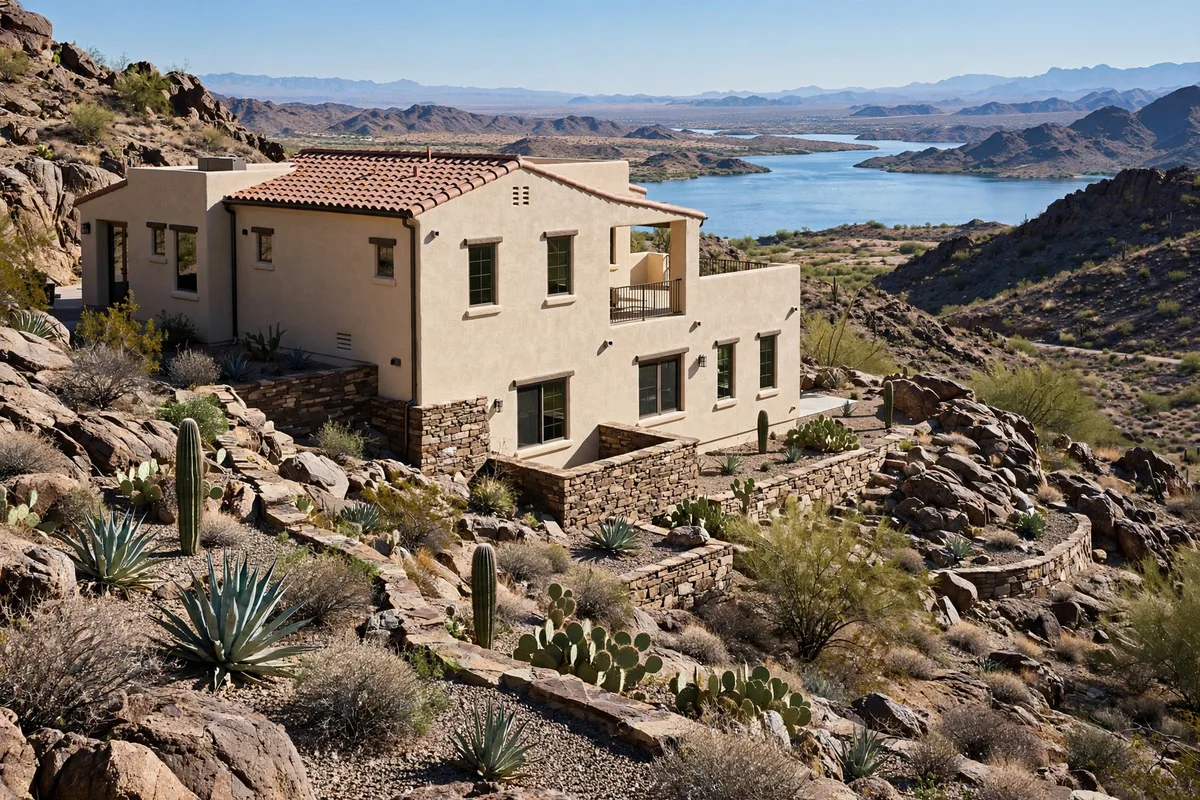
Lake Havasu City sits on rocky desert soil above the Colorado River. Rocky fill can rub against a buried line, and caliche layers drain poorly, so water from a leak pools around the slab and can surface far from the opening in the line. Hillside lots add grading and retaining walls that shape how water moves under a slab.
Lake Havasu City housing runs from early homes near the downtown waterfront to newer builds along Lake Havasu Parkway and on the hillsides. Older homes often carry copper lines that have carried hard water for a long time. Newer homes more often use PEX or newer copper, but a line laid through rocky fill can wear thin where it rests against stone.
Lake Havasu City draws its water from the Colorado River, and it runs hard. Mineral buildup wears at joints and bends, and extreme summer heat keeps lines expanding and contracting. When monsoon storms soak ground baked dry, they add a second round of soil movement each summer.
Lake Havasu City shares water system updates on the City of Lake Havasu City website, and for the river region's wider water picture, the Arizona Department of Water Resources publishes the data.
Detection in Lake Havasu City begins with a meter check and a walk through the rooms where the signs show, then listening gear, thermal imaging, pressure testing, and moisture readings narrow the leak to one place. A single leak in a sound line usually takes a spot repair. A line that has leaked before, or tests weak along its length, usually takes a reroute.
In Lake Havasu City, a warm patch on a tile floor or a damp patch that never dries is often the earliest clue. A bill that climbs while your usage stays the same is another. For the full list of signs and what each one means, see the homepage.
A slab leak runs around the clock, so the waste adds up fast. Learn why hidden leaks waste so much and how a meter test shows the flow.
A leak keeps floors and walls damp, and dampness can support mold growth. Learn the signs, what to do, and when to bring in a mold specialist.
Policies vary, so read yours before you file. Learn what to document, what to ask your insurer, and what a findings report covers.
Yes. We serve homes across Lake Havasu City, including older homes near the downtown waterfront and newer builds along the parkway. Detection starts with a meter check, then listening, thermal imaging, pressure testing, and moisture readings to narrow the leak to one place.
A patch that never dries usually means water is rising from below the slab. Rocky soil and caliche carry water along the slab, so the damp spot can sit far from the leak. We pinpoint the leak with instruments instead of digging where the damp patch shows.
Rocky fill can rub a buried line as the ground shifts, wearing the line thin at one spot. Hillside grading can also leave a line resting against stone or settling unevenly.
Hard water wears joints and bends as minerals build up inside the line. That wear thins the pipe until soil movement or extreme heat can finish the job. In Lake Havasu City, Colorado River water runs hard.
It holds when the rest of the line tests sound. If pressure testing finds weakness along the line, or the same line has leaked before, a reroute fits better. We tell you which case yours falls into before any repair work starts. That call matters most in older Lake Havasu City homes near the waterfront, where lines may date back generations.
Call us at (480) 681-1950. A warm spot means a hot-line leak is already warming the slab, and rocky soil can push the water along the slab while it runs.
Think you have a slab leak? Talk to us.
The downtown waterfront and the London Bridge district open our Lake Havasu City list, and the parkway north and south plus the hillside neighborhoods follow, with the full list below naming the areas we serve. Older homes near the bridge sit on it beside newer builds on the hillsides. When your area is missing, call us and we will confirm whether we reach you.
The ZIP codes across Lake Havasu City are 86403, 86404, and 86406.
Landmarks nearby include London Bridge, Lake Havasu, and the downtown waterfront.
Last updated: October 20, 2026.